
'The large number of tariff lines in the 90-99 per cent band highlights how deeply embedded Chinese sourcing has become in India's electronics imports.'

Bank credit to industry in India surged by 20 per cent year-on-year in July, significantly accelerating from the previous year, driven by strong expansion in sectors like engineering, gems and jewellery, and petroleum-related industries, according to the Reserve Bank of India (RBI). However, growth in gold loans, while still expanding, saw a sharp moderation.

Karnataka Chief Minister D K Shivakumar lauded KEONICS' initiative to provide AI-based KEO computers to rural children, marking the institution's golden jubilee. The KEO computers, developed in Karnataka, aim to bridge the digital divide. Shivakumar also highlighted government efforts to promote IT beyond Bengaluru, enhance industry-oriented skills, and digitise property records, emphasising the state's commitment to technology and skill development.

India is making a significant push to establish itself as a global semiconductor manufacturing hub, driven by strategic investments and policy support. The upcoming SEMICON India 2026 event will showcase the country's advancements and ambitions in this critical industry, which underpins virtually all modern electronic devices and has faced global supply chain vulnerabilities.

Samsung India Electronics has initiated job cuts in its Consumer Electronics (CE) division, laying off 8-10 mid-to-senior-level employees with plans to let go of another 40-50 staff. This move is part of a cost-rationalisation exercise driven by rising input costs, muted consumer demand, and intense competition from rival Korean and Chinese players.

There are 9.5 candidates for every engineering job at the zero-to-three-year level.

The Indian Air Force (IAF) demonstrated 'Vayu UTtaM', an indigenously developed multi-mode Unmanned Traffic Management (UTM) system, at 'Dronathon 2026' in Pokhran. This ground-based system is designed to manage drone operations in congested airspace and identify rogue drones, with applications extending to critical infrastructure, civil aviation, and public safety. The event also saw the release of the 'IAF UAS Roadmap' to guide indigenous innovation in unmanned systems.

India's exports saw a significant increase of 26.12 per cent to USD 43.81 billion in August, leading to a narrowed trade deficit of USD 26.86 billion, driven by strong demand from key global markets and diverse sectors.

Prime Minister Narendra Modi's 76th birthday was celebrated during the inaugural session of SEMICON India 2026 at the Yashobhoomi Convention Centre. The event, focused on building India's semiconductor ecosystem, saw attendees extend warm wishes to the Prime Minister before his address.
The Indian Air Force has launched 'Dronathon 2026' at the Pokhran range in Jaisalmer, a three-day event showcasing advancements in unmanned aerial systems (UAS) and counter-UAS technologies by domestic manufacturers. The initiative aims to bolster the IAF's capabilities in the unmanned domain, align with the 'Atmanirbhar Bharat' objective, and assess indigenous technologies against operational requirements through live demonstrations. It also fosters interaction between the IAF, industry, and even students, promoting the development of scalable unmanned solutions.

India's semiconductor sector has garnered USD 1.4 billion in total equity funding across 281 companies, with a substantial USD 701 million raised since 2025 alone, according to Tracxn data.
West Bengal has launched an Emerging Quantum and Semiconductor Technologies (EQST) section at CSIR-CGCRI to attract investments and position the state as a hub for next-generation technology. Minister Kalyan Chakraborti highlighted India's need to invest in these crucial sectors and outlined the state's plans to collaborate with institutions and leverage budget initiatives to foster research and start-ups.

Indian stock market benchmark indices Sensex and Nifty recorded their second consecutive day of decline, with the Sensex dropping 555.23 points and the Nifty falling 144.05 points, primarily due to rising crude oil prices and ongoing US-Iran hostilities in West Asia.

The proposed arrangement would involve sub-assembly kits produced at Lockheed Martin's facility in Troy, Alabama, and guidance electronics units manufactured at Raytheon's facility in Tucson, Arizona, being shipped to India for final assembly and integration.

A report by Bain & Company and HealthQuad identifies remote patient monitoring, OT/ICU optimisation, and chronic disease management as key opportunities for Artificial Intelligence in Indian healthcare. The report highlights a shift from experimental AI to real-world applications, driven by government initiatives, increasing EMR adoption, and a robust startup ecosystem. AI's autonomous capabilities are rapidly advancing while costs decrease, creating significant growth potential for providers and startups.

'Improved law and order and transparent governance have helped change UP's investment image.'
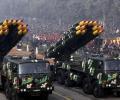
Global brokerage Jefferies forecasts a double-digit compound annual growth rate (CAGR) for India's defence spending, estimating a cumulative domestic opportunity of over $60 billion across four years, driven by geopolitical tensions and the government's indigenisation push.

Indian equity benchmark indices Sensex and Nifty rebounded sharply in early trade, with the Sensex jumping over 530 points, tracking a broad-based rally in Asian markets after four consecutive days of decline.

Indian benchmark indices, Sensex and Nifty, traded flat in early deals due to elevated crude oil prices exceeding USD 100 per barrel and persistent geopolitical tensions, which subdued investor risk appetite.
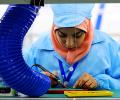
India has launched the ~62,500 crore Mobile Phone Manufacturing Scheme (MPMS) to incentivise domestic production and strengthen Indian mobile phone brands, offering production-linked incentives and additional benefits for local component sourcing.

Tata Sons has the balance sheet to support them, for now.
The benchmark BSE Sensex rebounded by 362 points, ending a four-day losing streak, driven by strong buying in metal, private banking, and oil and gas shares, while the broader NSE Nifty saw modest gains despite paring some advances in the closing session.

E-Eye, which cost about Rs 3,500 to develop, can test a sample for around Rs 2, making it particularly suitable for field-level water quality monitoring in areas where access to sophisticated laboratories is limited.
Researchers at IIT (ISM) Dhanbad have secured a patent for a novel temperature-independent optical sensor designed to precisely measure structural tilt in two directions. This lightweight sensor, utilising Fiber Bragg Grating (FBG) technology, offers enhanced monitoring capabilities for various applications including bridges, robotics, aerospace, and geotechnical systems, promising low maintenance and long-term stability checks.

Indian benchmark indices, Sensex and Nifty, continued their downward trend for the fifth consecutive day, with the Sensex dropping 281 points and Nifty falling 78 points, primarily driven by surging crude oil prices and persistent geopolitical tensions in West Asia.

The question for the next 20 years is not whether India can become a $5 trillion or $10 trillion economy. Those are attractive targets, but the real question is whether India can create enough productive jobs, educate its children properly, make its cities liveable, and give hundreds of millions of people a substantially better life, asserts Ramesh Menon.

'Regulations give a particular minimum amount of shares to be given in the OFS or IPO -- without which one cannot do the IPO.' 'We got that number on the day of filing of updated DRHP -- sufficient for us to go live with the IPO.'

Former Chief Economic Adviser Krishnamurthy V Subramanian outlines India's strategy to become a USD 55 trillion economy by 2047. The plan hinges on leveraging its young demographic in AI, dominating sunrise sectors like space and defence tech, attracting FDI, and achieving sustained 8% GDP growth.
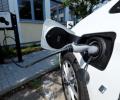
The Delhi government is set to equip its industrial training institutes (ITIs) with advanced labs to train young people in power electronics, electric vehicles, and the automotive sector, aiming to create a skilled workforce ready for industry demands.

The Lok Sabha has passed a Bill to amend the Payment and Settlement Systems Act, 2007, authorising the government to permit banks and service providers to levy charges on UPI and other electronic payment modes. This move aims to create a sustainable revenue model for the digital payments ecosystem, shifting from the current exemption of UPI transactions from such charges.
An industry-led AI curriculum taskforce has recommended shifting the present lecture-based teaching system for technical education to learning from real industry use cases and enhancing practical exposure of students.

One of the important topics of discussion between the two leaders is expected to be the Northern Sea Route and the Chennai-Vladivostok Maritime Corridor.

Chandra's tenure also saw a big jump in Tata Sons' other income, such as brand fee from group companies, treasury gains, and other non-recurring income.

Larsen & Toubro (L&T) is investing Rs 5,000 crore over five years to enter the automotive components sector, focusing on electric vehicle (EV) motors, safety systems, and connected-vehicle technologies, aiming to become a Tier-I auto supplier.

Researchers at NIT Rourkela have patented a novel hybrid energy-storage system designed to significantly improve the efficiency and lifespan of electric vehicle batteries. This innovation addresses common issues like low power density and thermal stress by integrating supercapacitors with a simplified architecture, making EVs more reliable, especially in urban driving conditions.
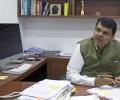
The Maharashtra government is setting up a ministerial task force, led by Minister Ashish Shelar, to ensure the effective implementation of its drone policy. Chief Minister Devendra Fadnavis announced this, emphasising the need for a "policy of policies" to integrate R&D, manufacturing, testing, and subsidies, and to strengthen the state's drone ecosystem, including developing a 'Drone City'.

For India, the goal is not simply to host another grand diplomatic gathering. It is to prove that a diverse coalition of emerging powers can still deliver.

The search for N Chandrasekaran's successor as Tata Sons Chairman has reportedly narrowed to Tata Steel CEO T V Narendran, Tata Sons Executive Director Saurabh Agrawal, and NSE MD & CEO Ashish Chauhan, with Chauhan emerging as a potential 'dark horse' candidate.
GSTN has put on hold its planned enhancements to the e-way bill system, providing businesses with crucial time to adapt to the proposed changes amid widespread industry concerns.

Prime Minister Narendra Modi, addressing the nation from the Red Fort on Independence Day, declared that India is undergoing a rapid transformation across various sectors and is firmly on track to become a developed nation by 2047.
